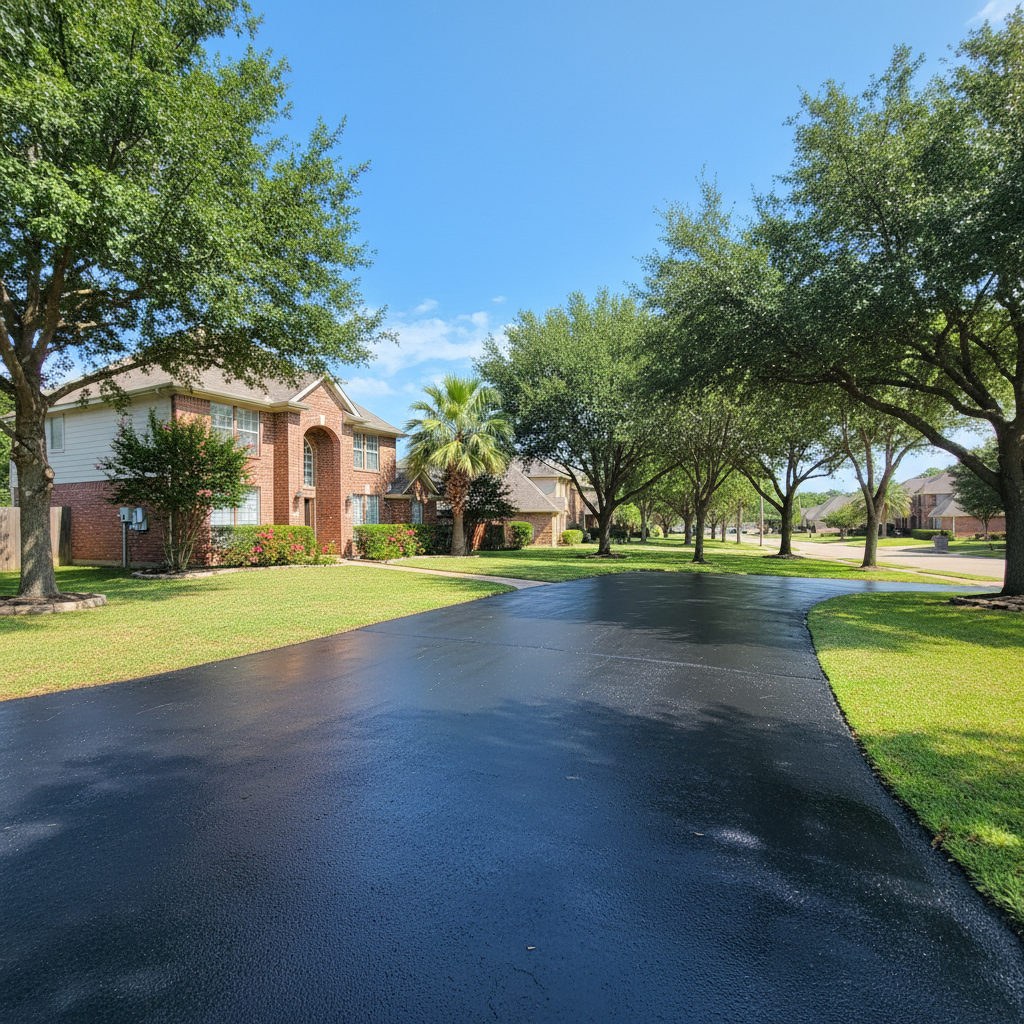
Got an asphalt driveway, do you? Maybe it's seen a few years, starting to look a bit faded, or you're noticing some tiny cracks popping up. You're probably asking yourself if sealcoating is really worth it, or if it's just some fancy extra service. Let me tell you, especially here in Sugar Land, it's not just extra; it's genuinely smart.
I've been knee-deep in asphalt for a long time, seen countless driveways in neighborhoods from New Territory to First Colony. Our climate here is just plain tough on pavement. We get these scorching summers that bake the oils right out of the asphalt, then we're hit with heavy, sudden downpours that can seep into those tiny cracks and start doing real damage. That's exactly where sealcoating steps in.
What Does Sealcoating Actually Do?
Think of sealcoating as sunscreen and a protective shield for your driveway. When your asphalt was first put down, it had plenty of oils and binders that kept it flexible and strong. Over time, especially with our intense UV rays, those oils oxidize and dry out. That's why your driveway starts looking gray instead of black, and it gets brittle, you know?
Sealcoat is a liquid mix, usually made from coal tar or asphalt emulsion, that we spread over the surface. It does a few really important things:
- Protects from UV Damage: It adds a fresh, dark layer on top that soaks up the sun's rays, shielding the asphalt underneath from oxidation. This keeps those crucial oils from drying out too fast.
- Resists Water Penetration: It fills in those tiny hairline cracks and pores, creating a waterproof barrier. This is a huge deal for us in Sugar Land. When water gets into cracks and then expands and contracts with temperature changes (even the mild ones we get here), it makes those cracks bigger, and fast.
- Prevents Oil & Gas Stains: Ever notice those ugly oil drips from your car? Sealcoat makes the surface less porous, so spills are easier to clean up and don't soak in as much.
- Restores Appearance: Let's be honest, a fresh coat of black sealcoat makes an old, faded driveway look practically new. It really boosts your home's curb appeal, which is always a plus, especially if you're thinking about selling down the line.
When Should You Sealcoat?
There isn't one perfect answer for everyone, but generally, I suggest waiting about a year after new asphalt is installed before that first sealcoat. This gives the asphalt enough time to cure properly. After that, every 2-3 years is a good rule of thumb for residential driveways here in Sugar Land. If you've got a commercial parking lot with heavier traffic, you might need it a bit more often, of course.
You'll know it's time when you see the color fading, the surface looking dry, or those small, spiderweb cracks starting to show. Don't wait until you have potholes or major cracks – sealcoating is about preventing problems, not fixing severe damage.
Why Local Expertise Matters for Sealcoating
This isn't just about slapping some black stuff down. The kind of sealcoat, how it's mixed, and the way it's applied all depend on local conditions. For example, the high humidity we often deal with in Sugar Land means we have to be extra careful about drying times and making sure it sticks right. You can't just put it on when it's about to rain, obviously, but you also need to understand how our heat and humidity affect the curing process.
We also see a lot of clay soil around here, which can cause some movement under driveways. While sealcoat won't fix structural issues, a good contractor will know to look for signs of underlying problems before applying the sealcoat and give you advice. I've seen too many DIY jobs or out-of-town companies come in and do a shoddy job because they just don't understand our specific environment.
At Primetime Paving, we've been doing this in Sugar Land for years. We know the conditions, we know the products that hold up best here, and we know how to apply them correctly. We're not just trying to get in and out; we're building relationships with our neighbors. Your driveway is a big investment, and protecting it with regular sealcoating is one of the smartest things you can do to extend its life and keep it looking great.
Don't let your asphalt bake and crack. Give it the protection it needs, and you'll save yourself a lot of headaches and money down the road.