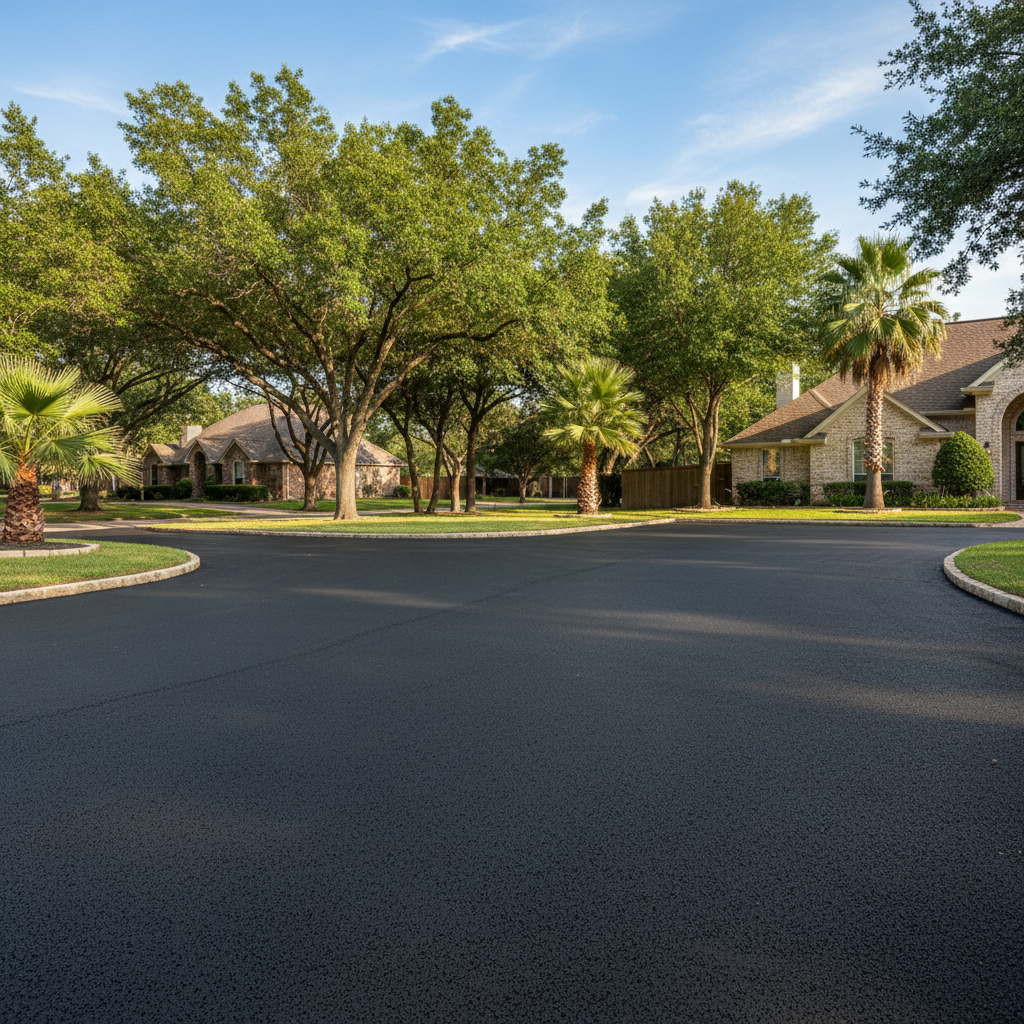
Alright, let's talk about your parking lot. It's more than just a slab of asphalt; it's the first thing customers see, and it adds real value to your property. Here in Sugar Land, with our scorching summers and those sudden, heavy downpours, a parking lot really takes a beating. You can't just pave it and then forget about it. That's a surefire way to end up with some seriously expensive problems later on.
How to Squeeze More Years Out of Your Pavement
You want your parking lot to last a good long while, right? Of course you do. The good news is, a lot of its longevity comes down to some pretty basic stuff. It's not brain surgery, but it does need you to be consistent.
- Keep it Clean: This sounds simple, but it's actually a huge deal. Oil spills, fuel leaks, chemicals—even just piles of leaves and general debris—can break down asphalt over time. Regular sweeping and quickly cleaning up spills really stop things from deteriorating. I've seen lots in Riverstone and New Territory get stained up pretty fast if folks aren't on top of it.
- Manage Drainage: Water is asphalt's arch-nemesis. If you've got standing water after a rainstorm, that's a red flag. It seeps into cracks, expands when it freezes (which is rare here, but it still happens occasionally), and just weakens the base. Make sure your catch basins are clear and that water is actually flowing off the lot the way it's supposed to. If it's pooling, you've definitely got an issue that needs attention.
- Control Traffic: Heavy trucks, especially when they're making tight turns, put a ton of stress on pavement. If you can, try to direct those big vehicles to specific areas or routes that are actually built to handle that kind of weight. Overloaded vehicles are another big reason pavement fails sooner than it should.
- Sealcoat Regularly: Look, I know we talk about sealcoating a lot. But for a parking lot, it's even more important than it is for a driveway. Think of it like sunscreen for your asphalt, shielding it from UV rays, water getting in, and chemical spills. Depending on how much traffic you get and how much wear and tear it sees, you're usually looking at every 2-3 years for a commercial lot.
What Does "Regular Maintenance" Really Mean?
So, beyond those general ideas, what's the actual day-to-day or month-to-month work involved? Mostly, it's about looking things over and jumping in quickly when you spot a problem.
- Daily/Weekly Visual Checks: Have your staff keep an eye out. Are there new cracks popping up? Potholes starting to form? Any oil slicks? The sooner you catch these things, the less they'll cost to fix.
- Monthly Sweeping/Cleaning: Get a professional sweeper in there, or if your lot is smaller, have someone do it manually. Get all that grit and grime out.
- Quarterly Drainage Inspection: Check those drains. Are they clear? Is water moving through easily? If not, get them cleaned out.
- Annual Professional Inspection: This is where someone like Primetime Paving comes into the picture. We'll walk the lot with you, point out any issues, and give you a plan. We're looking for things you might miss, like subtle hints of base failure or the very beginnings of alligator cracking.
Warning Signs You Absolutely Can't Ignore
Your parking lot will tell you when it's in pain, if you just know what to look for. Don't wait until it's a full-blown crater, okay?
- Cracks: Not just any cracks, but specific kinds. Hairline cracks are normal, but if they start getting wider, connecting up, or forming a spiderweb pattern (we call that 'alligator cracking'), you've got trouble. Alligator cracking means the base layer is giving out, and that's serious business.
- Potholes: These are pretty obvious. They start small, but water gets in, cars hit them, and they grow fast. They're not just an eyesore; they're a liability.
- Fading and Discoloration: If your asphalt is looking gray instead of that deep black, it means the binder is oxidizing. That's a sign it's losing its flexibility and protection. Sealcoating can usually take care of this.
- Pooling Water: We talked about this one. If water sits for more than a few hours after a rain, your lot has drainage problems or low spots that need leveling.
- Raveling: This happens when the aggregate (those small stones) starts coming loose from the surface. It looks like the asphalt is just falling apart. It means the top layer is failing.
- Depressions or Uneven Spots: If you see areas where the pavement is sinking or becoming uneven, it could point to a weak sub-base or that it wasn't compacted well during installation.
When to Call a Pro (Like Us, or Someone Similar)
Look, a lot of the everyday stuff you can handle yourself. But there are definitely times when you absolutely need to bring in the experts. Don't try to DIY major repairs on a commercial lot; you'll probably just make it worse or throw money away on a temporary fix.
- Significant Cracking: If you've got extensive alligator cracking or wide, deep cracks, you need professional repair. We'll clean them out, fill them correctly, and often sealcoat over them.
- Potholes Larger Than a Dinner Plate: Small potholes can sometimes get patched, but bigger ones need a more serious repair—often cutting out the damaged section and replacing it entirely.
- Drainage Issues: If water isn't draining right, it might mean re-grading the lot, putting in new drains, or adjusting the ones you already have. That's definitely a job for someone with heavy equipment and real expertise.
- Before Sealcoating: You always want a professional to get the surface ready and apply the sealcoat. Doing it wrong can lead to peeling, uneven coverage, and the coating wearing out much faster.
- Striping and Markings: While not structural, clear, well-maintained parking lot striping is super important for safety and traffic flow. If yours are faded, get them re-striped.
- Anytime You're Unsure: Seriously, if you see something that looks off and you're not sure how to handle it, just pick up the phone. It's always better to get an opinion early than to let a small problem blow up into a massive, expensive headache. We're right here in Sugar Land, we know the local conditions, and we're happy to take a look.
Your parking lot is a workhorse for your business. Treat it right, keep a close eye on it, and don't hesitate to bring in the pros when things get beyond a simple sweep or spot clean. It'll save you a ton of money and hassle in the long run, believe me.