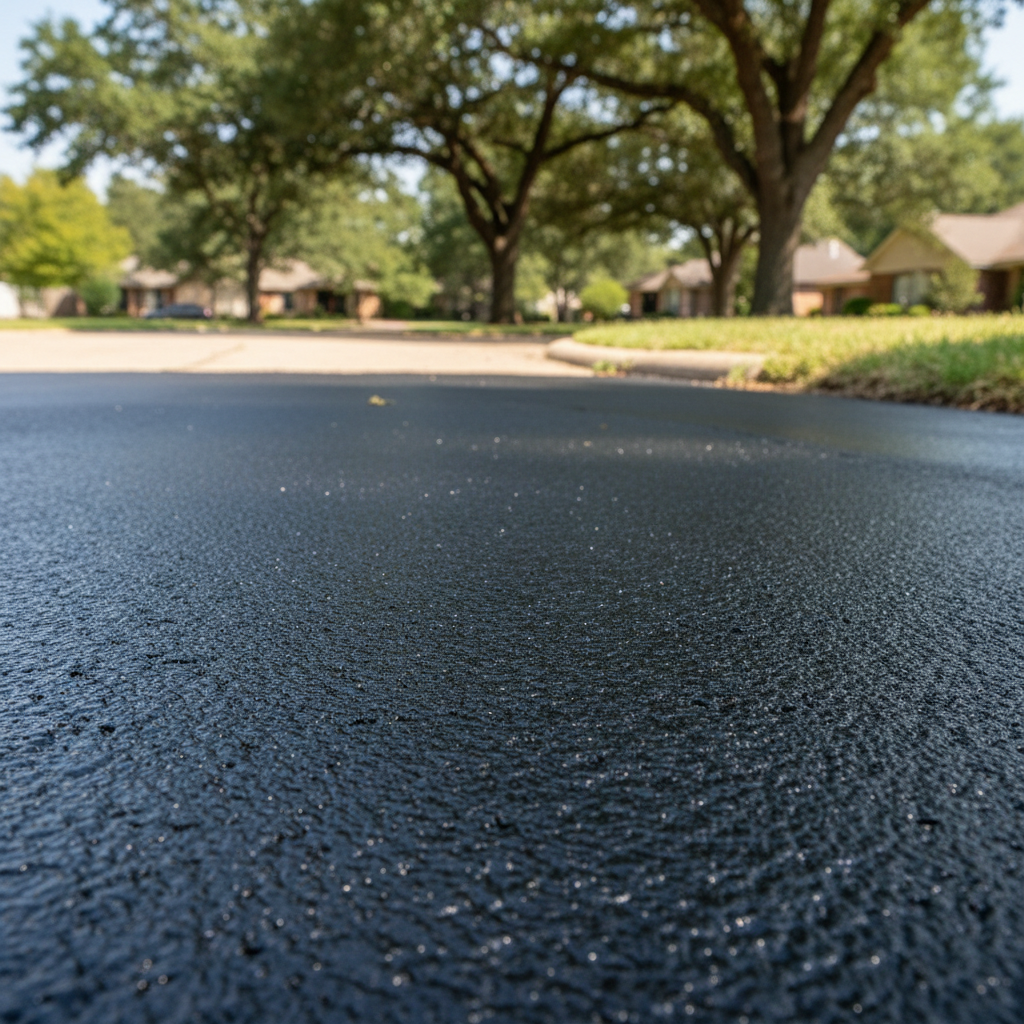
Asphalt Sealcoating in Sugar Land, TX is something homeowners ask about every single day out here in Fort Bend County. The local weather is brutal on pavement, between the relentless summer sun and those sudden torrential downpours we get off Highway 6. Primetime Paving receives questions from homeowners about Asphalt Sealcoating so residents can figure out what their property actually needs.
How often do I really need to sealcoat my driveway in Sugar Land?
Homeowners usually want to apply a fresh coat of Asphalt Sealcoating every 2 to 3 years. If your driveway sits facing south and bakes in the direct sun all day without shade, you might lean closer to that two-year mark. Driveways tucked under heavy oak trees in neighborhoods like First Colony hold up differently, but the UV rays down here wear down the binder in the asphalt faster than you think.
Can I just go to the hardware store and roll it on myself?
Homeowners can buy those 5-gallon buckets at the big box store. There is a massive difference between what you roll on from a bucket and what a professional crew puts down with proper spray equipment. Those DIY products are typically diluted with water and fillers. At Primetime Paving, we use commercial-grade coal tar or asphalt emulsion sealers that actually bond with the aggregate. If you want Asphalt Sealcoating that lasts more than a single season, professional application wins every time.
How long do I have to keep my cars off the driveway after you finish?
Plan on keeping foot traffic off for about 24 hours and keep your vehicles parked on the street for at least 48 hours. If it is the middle of August and the humidity is sitting at 90 percent, give it that full two days to cure properly. Turning your wheels sharp while backing out on a partially cured driveway will tear up that fresh black finish instantly.
Will sealcoating fill in those annoying cracks in my asphalt?
Asphalt Sealcoating does not fill in cracks. Sealcoating is strictly a protective skin for the surface. It stops water infiltration and blocks UV rays, but it does not structurally repair damage. If you have cracks wider than a quarter-inch, you need hot-pour rubberized crack filling done before any sealcoat goes down. Otherwise, you are just painting over a problem that will keep right on growing.
What is the deal with our local soil and how does it affect the pavement?
Sugar Land is famous for its expansive clay soil. When it rains, that clay swells up; when it bakes during a drought, it shrinks and cracks. This constant shifting creates sub-base movement underneath your asphalt. Asphalt Sealcoating keeps surface water from soaking down into that base layer and exacerbating the shifting, which helps prevent those major structural collapses.
Does sealcoating make the driveway slippery when it rains?
Asphalt Sealcoating can be slippery right after it is applied, especially during the first couple of heavy rainstorms. That is why professional contractors often mix fine silica sand into the sealer. The sand provides extra traction so you do not slip walking to your car when a sudden Gulf storm hits.
Taking care of your pavement does not have to be a guessing game. If you are noticing your driveway starting to look gray and weathered, reach out to Primetime Paving for Asphalt Sealcoating services in Sugar Land, TX before minor wear turns into a major paving bill.