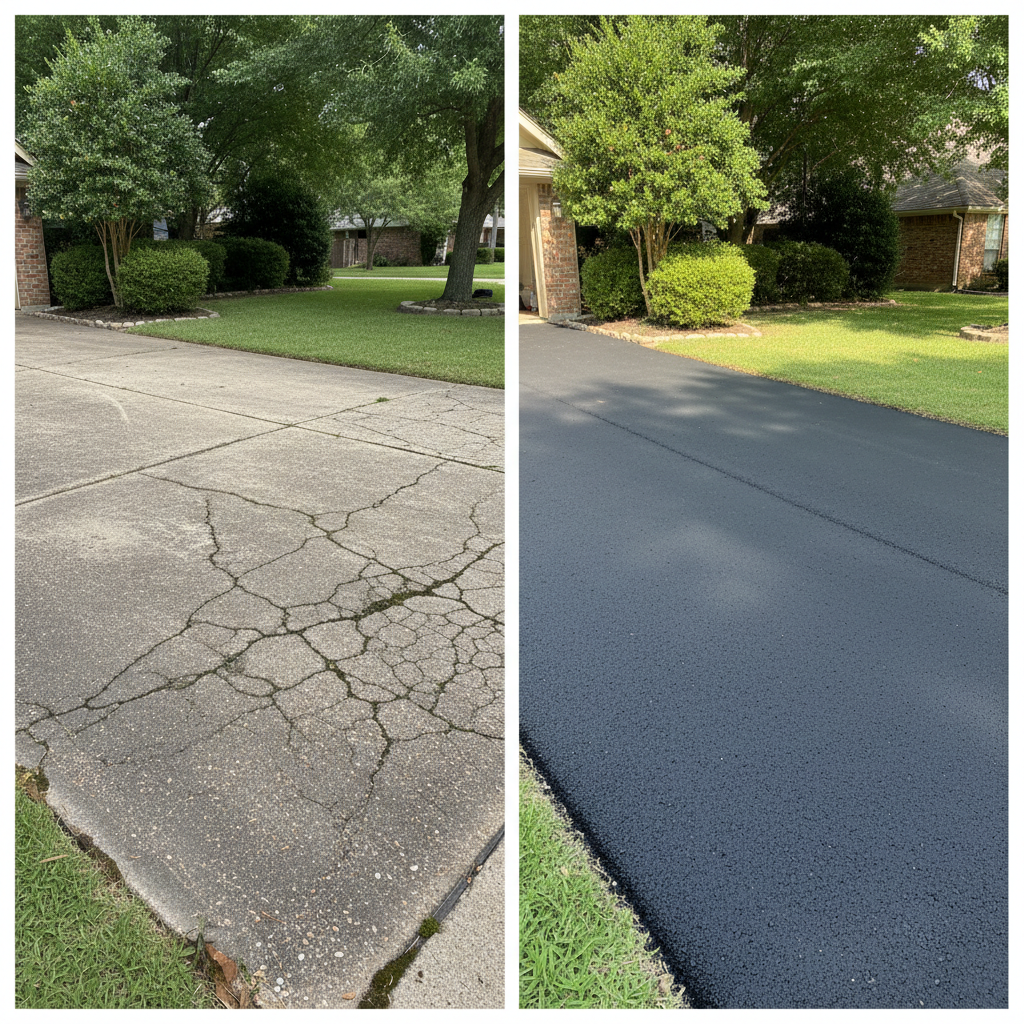
Your driveway's seen better days, huh? Cracks are spreading, maybe some potholes are forming, and you're wondering if it's time to do something about it. For most folks in Sugar Land, when it comes to asphalt, you've generally got two main paths: an asphalt overlay or a full-depth replacement. I get asked about this all the time, so let's talk about what each one means for your home.
Asphalt Overlay: The Resurface Route
An asphalt overlay, sometimes called resurfacing, is essentially putting a brand new layer of asphalt right over your existing one. Think of it like a fresh coat of paint, but for your driveway. We'll clean the surface, repair any major cracks or potholes first, and then apply a new layer, usually 1.5 to 2 inches thick, right on top.
Pros of an Overlay:
- Cost-Effective: This is usually the big one. An overlay is almost always cheaper than a full replacement because we're not tearing out and hauling away all that old material. Less labor, less material, less cost.
- Quicker Project: Since there's less demolition and excavation involved, we can get an overlay done faster. You'll have your driveway back in action sooner.
- Good for Structurally Sound Driveways: If your current driveway has a solid base and the damage is mostly confined to the top layer – surface cracks, minor rutting, fading – an overlay can make it look brand new and extend its life significantly.
Cons of an Overlay:
- Not for Deep Damage: If your driveway has major structural issues, like widespread alligator cracking, significant heaving from tree roots, or a failing base, an overlay is just putting a band-aid on a bigger problem. Those underlying issues will eventually show through the new surface.
- Can Raise Driveway Height: Adding a new layer means your driveway will be a bit higher. We always check clearances at garage doors and transitions to sidewalks or streets to make sure this won't cause problems.
- Shorter Lifespan (Potentially): While it extends life, it won't last as long as a brand-new, full-depth driveway if the original base isn't perfect.
Full-Depth Replacement: The Fresh Start
A full-depth replacement is exactly what it sounds like: we tear out your entire existing driveway – asphalt, base, and all – and build a brand new one from scratch. This involves excavating the old material, preparing and compacting a new sub-base, laying down a fresh aggregate base, and then paving with new asphalt.
Pros of a Full Replacement:
- Maximum Durability & Lifespan: This is the gold standard. When you replace everything, you're getting a completely new, structurally sound driveway that, with proper maintenance, will last the longest – often 20 years or more.
- Addresses All Issues: If you've got drainage problems, a failing base, significant root damage, or major settling, a full replacement lets us fix all those underlying issues properly. We can re-grade for better water flow, install new drainage, and ensure a rock-solid foundation.
- Customization: Starting fresh gives us more flexibility for things like widening the driveway, changing its shape, or adjusting slopes.
Cons of a Full Replacement:
- Higher Cost: No surprise here. More demolition, more excavation, more material, more labor – it all adds up. It's a bigger investment upfront.
- Longer Project Time: Tearing out and rebuilding takes more time. You'll have your driveway out of commission for longer.
- More Disruptive: There's more noise, more heavy equipment, and more debris during the process.
So, What's Right for Your Sugar Land Home?
Here's the deal: for most of us in Sugar Land, especially in areas like New Territory or Telfair where homes have been around a while, we've got some unique challenges. Our clay soils can be tricky, expanding and contracting with our wild weather swings, which can put a lot of stress on driveways over time. Plus, we get a lot of rain, so good drainage is critical.
If your driveway is relatively young, say 10-15 years old, and the damage is mostly surface-level – some fading, hairline cracks, maybe a few small potholes – an overlay is often a fantastic, cost-effective solution. It'll give you a beautiful, smooth surface and buy you another 7-10 years of life without breaking the bank. I've done plenty of overlays in Riverstone that still look great years later.
However, if your driveway is older, say 20+ years, or if you're seeing significant issues like widespread alligator cracking (where it looks like a crocodile's skin), major depressions, standing water, or sections that have clearly sunk or heaved, then you're probably looking at a full-depth replacement. Trying to overlay a driveway with a failing base is like putting a fancy hat on a crumbling statue – it just won't hold up. You'll end up spending more in the long run when those underlying problems eventually break through the new surface.
My honest recommendation? Get a professional assessment. I can come out, take a look at your driveway, and tell you straight up what I think is the best approach for your specific situation and budget. We'll check the base, look at drainage, and discuss your options. At Primetime Paving, we want to make sure you get a solution that lasts and looks great for years to come.